
The A–Z of Value-Based Procurement — 2026 edition
Brian Mangan • September 28, 2026
A one-page A–Z of Value-Based Procurement — 26 entries, one line each. Designed as a quick reference for anyone new to VBP and a conversation prompt for anyone already using it. Refreshed for the 2026 landscape and the feature currently running letter-by-letter through the VBP Update monthly newsletter.
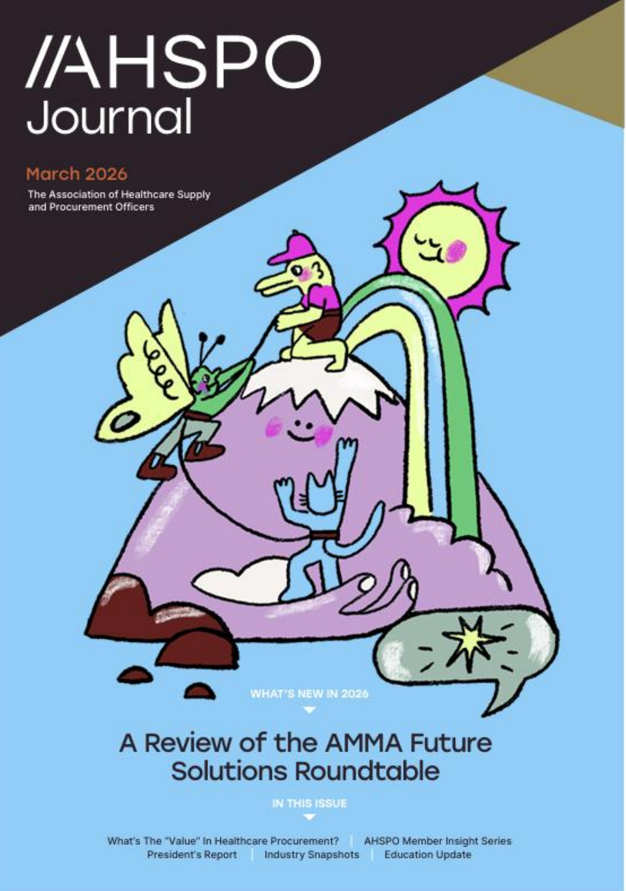
Published in the AHSPO Journal (Nineteenth Edition, March 2026) — a personal account of the journey from Head of Procurement at two NHS hospitals into becoming a national and international advocate for value in healthcare procurement. Written for the Association of Healthcare Supply and Procurement Officers in Australia, ahead of the AHSPO conference invitation later in the year.

A joint article with Rob Bull, former Chief Financial Officer at Southlake Health in Canada, on why finance professionals are central to unlocking Value-Based Procurement in healthcare. The article sets out four practical challenges facing healthcare finance teams and offers a F-A-S-T framework for making Value-Based Procurement stick. Now published and available to download. Introduction Traditional approaches to healthcare procurement, often heavily weighted towards upfront price, are increasingly seen as insufficient to address rising demand, workforce pressures and long-term sustainability challenges. Many health systems are facing growing pressure to improve outcomes while managing rising costs and constrained resources. Value-Based Procurement (VBP) broadens procurement decision-making beyond unit cost and product specifications to consider outcomes across care pathways. The approach emphasises engagment with clinical teams and patients to identify challenges in treatment pathways, what needs to change and by how much to make a difference. It typically sees healthcare systems engage collaboratively with industry, both Medtech and Pharma, to identify and create solutions to meet these needs. Benefits created can include reduced costs, improved levels of efficiency, enhanced patient and provider experience , and reduced carbon emissions. From experience of developing and promoting the adoption of VBP as a stepping stone to value-based healthcare, it is evident that one of the primary challenges to its adoption has been gaining support and recognition from the Healthcare Finance Community. In this article we share the views of the challenges and opportunities for greater VBP integration with finance and conclude with recommendations to act F-A-S-T. Challenge #1 — What is "Value"? There have been numerous articles that have cited this challenge, as it's evident that there is a different interpretation of ‘value’ from the different functions within healthcare and in Medtech and Pharma suppliers. The pursuit of ‘value’ in healthcare is often championed by clinicians and associated with the delivery of improved patient outcomes. The reality of delivering healthcare in the 21st century is that there are limited financial resources, making affordability a key consideration in the delivery of sustainable healthcare. Therefore, it is essential for outcomes to be articulated in a way that clearly quantifies the economic benefits created and how VBP’s impact on the total patient pathway will be measured and monitored. Opportunity #1 — Creation of standardised metrics In 2023 the NHS aimed to address this challenge by developing a value and savings methodology. This was achieved with the support and input of Senior Finance leaders from NICE and the NHS. The purpose of the document is to help create a common understanding of how value can be recognised in financial terms. The document defines a series of common value/efficiency metrics and applies an associated proxy cost to each area. This form of approach is something that could be considered and built upon by other health systems. Challenge #2 — Silo working At a macro level, finance and funding structures (in public healthcare systems in particular) operate in siloes. This can cause significant barriers for hospital budget holders and organisational finance leaders to assess value-based solutions where costs are incurred in one part of the pathway, but benefits accrue elsewhere; in other words, "Who pays — Who saves?" Literature shows that this misalignment of incentives across stakeholders is a significant barrier to implementation, despite the potential for reductions in whole-life costs of care. Opportunity #2 — Integrated care and bundled payments Many countries are looking towards the adoption of Integrated Care Systems (ICSs), which aim to embed system-wide health economic perspectives into financial flows. However, for those providers and payers not yet transitioning toward an ICS, there are opportunities and indeed a necessity to look at ways to collaborate across local commissioners, primary and secondary care providers. This could be achieved with the support of senior organisational leaders agreeing to create some form of mutually beneficial gain share agreement, where if one party incurs cost the benefiting party will share the upside gains. Another option is to agree some form of bundled payment model with national or local commissioners. Instead of being paid for each individual service (imaging, a surgical procedure, or home care), the providers receive a lump sum that can be distributed according to the care needs of the particular patient. This bundled payment promotes greater integration and coordination of care to reduce costs while maintaining quality, thereby incentivising providers to work together to deliver better outcomes. Challenge #3 — Light green $ v dark green $ Many value-based solutions will result in improved efficiency and improved healing rates, generating a reduction in the time patients spend in hospital (reduction in length of stay) and overall lower treatment costs of care. However, experience has shown that many healthcare finance professionals are unconvinced that this represents a financial benefit to the hospital as the bed is still there and being staffed. Indeed in a physical sense the bed has not been removed, nor the ward in which it sits; however through more efficient process this would mean that there is less time spent per patient in the bed. Together, this makes it possible to improve patient flow, reduce waiting times in emergency departments, and treat more elective patients without the need to invest in additional capacity. This improved productivity gain will reduce the total costs of treatment for a healthcare provider and enable them to undertake more procedures within their allocated budget. Where public owned health systems are using the private sector to reduce waiting lists, a VBP approach could reduce the level of that expenditure. In respect of removing barriers between finance and procurement functions, the recommendation is for a programme of interdepartmental knowledge sharing be undertaken, with finance professionals encouraged to play an active role in creation of value based tendering and evaluation methodologies. Opportunity #3 — Clearly articulate the benefits Value-based proposals should highlight clearly the level of capacity released and its impact on the potential to centralise resources. This can help create opportunities for economies of scale and reduction in front line service costs. Studies show that returning patients home quickly can reduce their likelihood of acquiring infections, improve their rate of recovery, and increase their satisfaction. Challenge #4 — Relationships with industry Adversarial relationships between buyers and suppliers are still largely prevalent across health systems, alongside a degree of scepticism about industry motivations.Value-based proposals are often viewed less as genuine attempts to improve patient care and more as a justification for premium pricing. While Chief Financial Officer (CFO) at Southlake Health, Rob Bull and his team sought to dispel this notion and engaged in innovative procurement project aligned to the principles of value leading to reductions in cost, reduced wait times, and increased bed capacity. Value Based Procurement Improves the Patient Experience Opportunity #4 — Assurance agreements Acknowledging that value-based solutions require input and commitment from both buyers and suppliers to ensure the delivery of the project objectives, the recommendation is for the creation of value-based assurance agreements as part of the supply contract that can act as guard rails for the duration of the contract. Within the assurance agreement is a requirement to set out clear roles and responsibilities for delivery, measures and targets and embed remedies for underperformance and incentives for exceeding delivery expectations. Challenge #5 — Leadership Pursuit of value in healthcare requires change at a system level, within both healthcare providers and industry, to align policy, processes and people. In terms of the adoption of value, leadership my need to take the form of both organisational and political commitment at the highest level to transition from short-term, localised financial accountability to one that recognises and measures the reduction in the costs of population healthcare provision. Opportunity #5 — Evidence Organisations at a local, regional or national level should pursue programmes of activity to establish a portfolio of use cases that can demonstrate how a value-based approach to procurement can work and give system and government leaders the inspiration and confidence to provide support for the adoption. Summary — Act F-A-S-T F - Finance leaders’ support is critical to creating mechanisms for the delivery of improved patient outcomes and sustainable healthcare provision. Engage with government Health and Finance Ministers, Hospital CFOs and finance representative groups to demonstrate the benefits of the adoption of a value-based approach to procurement. A - Assurance agreements are an effective tool for overcoming traditional adversarial buyer/supplier relationships. They act as a mechanism to reduce the perceived financial and operational risk of working with industry to embed new ways of working resulting from value-based initiatives. They instil confidence in healthcare providers that supply partners are committed to working in collaboration to create value for the healthcare system. S — System thinking is critical to delivery of value in healthcare. Engage across your health system, align agreements to promote whole health economy benefits and provide economic incentives for participation T — Tangible benefits must be evidenced if a value-based approach to healthcare and procurement is going to be adopted. For healthcare providers, identify your top three most problematic treatment pathways, determine what needs to change and by how much. Engage with industry, measure the results and communicate success. Conclusion The pursuit of value in healthcare is a passion shared by both authors of this article. We see that healthcare is facing unpredicted challenges and are encouraged to see the growing momentum across global health systems in transitioning to value-based solutions as a means of providing effective, affordable and highquality patient care. We hope our thoughts will stimulate discussion and offer some pragmatic steps you can use on your value journey. Brian Mangan — Founder, Luach Consulting Group Rob Bull — Executive Vice President and Chief Financial Officer, Sinai Health

How prepared are you for Value‑Based Procurement? Use our VBP Readiness Tool to assess your capability.
At Luach Consulting Group, we support health systems and industry partners—across Medical Devices, Digital Health, Capital Equipment and Pharma—to move beyond traditional tendering and understand how Value‑Based Procurement can deliver measurable improvements in outcomes, efficiency and total cost. This video offers a practical introduction to the role VBP can play as a powerful enabler of Value‑Based Healthcare, helping organisations align clinical, operational and financial priorities around what truly delivers value.
Luach Consulting Group and its partner organisation, Hill Dickinson, have been developing and promoting the benefits of transitioning towards a value-based approach to procurement and healthcare for a decade. Significant progress has been made in recent years, with the completion of a national VBP proof-of-concept project sponsored by NHS Supply Chain and subsequently developed further by the Medtech Directorate of the Department for Health and Social Care. This article considers how value-based approaches are emerging as a means to deliver improved patient care, increase efficiency in clinical practice, and reduce the total costs of care. It is closely aligned with the objectives outlined in the recently published NHS Fit for the Future (FFTF) strategy. As the value paradigm reshapes the healthcare landscape, Luach Consulting Group stands uniquely equipped to help your organisation lead the way and unlock its full potential, contact us for an exploratory discussion. Click on the link below to download the full article.
On 22nd May 2025 Luach Consulting Group, in partnership with law firm Hill Dickinson, held the second in a series of events focussed on accelerating the adoption of value- based procurement (VBP). Our initial event, in October 2024 was extremely successful and identified six key areas of development including: The need to be clear about what is meant when we use the term ‘value’ to bring about widespread VBP adoption Aligning the NHS finance regime to recognise and incorporate value The need to evidence and contract for the delivery of value in the NHS - harnessing the power of data and measurement Incentivising a longer-term focus Creating a visible pipeline of VBP activity Maintaining a consistent agreed communications strategy for VBP adoption This second event in May 2025 picked up these themes with the aim of both assessing progress in addressing these areas; and engaging with the wider clinical and NHS finance community to promote wider stakeholder support and involvement. Whilst the event pre-dated the publication of the new 10 year plan for the NHS “Fit for the future”, it is highly encouraging to see that the work the group has undertaken is closely aligned with the ambitions of the Government strategy in terms of its focus on the delivery of value, productivity, improved patient outcomes and promotion of innovation. If you would like to receive a copy of the report please email us at consult@luachcg.com

The NHS is increasingly committed to Value-Based Procurement (VBP) and is planning to implement a standard evaluation methodology and we are also seeing health systems in Europe and the Middle East establishing projects to explore the benefits of procuring for value. This presents a fantastic opportunity for industry players to align their products and solutions with NHS needs. We've recently launched an e-learning course designed to upskill staff in sales, marketing, market access, and customer services. This course is versatile enough to apply to any country, focusing on the universal principles of what value means to healthcare. Key Features: • Cost-Effective and Quick: An efficient way to upskill your workforce. • Subtitles Available: Includes subtitles and can be translated into other languages on demand. • Broad Applicability: Ideal for entry-level training and adaptable to various regions. Explore the Course: To find out more details please email us at consult@luachcg.com
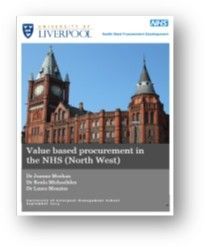
A look back at the VBP research project of 2015

2025 has started with the publication of the report from the Department for Health and Social Care and NHS England on the need for reforms to elective care for patients served by the English NHS. The report sets out its proposals to reduce the elective backlog of clinical procedures which stands (of January 2025) at circa 7 million. The aim is that by 2029 the NHS will ensure that 92% of patients receive treatment within 18 weeks. This briefing document considers how a value based approach to procurement can support reforms to elective care for patients, and is intended as supporting material that can be used by LCG clients to align their messaging to the needs of the NHS.

It was encouraging to see that the new Government had commissioned a review of the NHS within its first 100 days. The purpose of this article is to consider some of the key messages and findings from Lord Darzi’s report through the lens of a value based approach to procurement. Productivity The report states at length about the fact that staff are working harder than ever and still experiencing challenges increasing productivity across the system. The lack of capital funding and assets is cited as a major contributor to this inefficiency, coupled to the need to improve patient flow throughout the system. A reduction in length of stay, greater use of day case surgery and releasing bed capacity through the application of technologies that enable patients to be treated at home, are all cited as desirable ways of working for the NHS. Through the initial Value Based Procurement (VBP) pilot project undertaken by NHS Supply Chain, there are several case studies that have been written where these objectives have been achieved across different pathways 1. Given that there was limited investment in the resources to undertake the proof of concept pilot, it would appear that wider adoption and application of VBP across multiple strategic areas has the potential to make a significant impact to the productivity goals cited in the report. Sustainability Through focusing on pathway optimisation, it was also identified in the NHS Supply Chain project 2, that per procedure a VBP approach has the potential to reduce carbon emissions, for example through reduced theatre time with the use of minimally invasive technologies and reduction patient travel through remote monitoring and care provided in a patients home. Value creation Lord Dazi refers to “value creation” in the report. The challenge, as I know from experience of VBP, is the need for the NHS to be clear what value means and translate this into tangible and measurable objectives/outcomes. When explaining how to adopt a value based approach to procurement professionals, I have recommended they undertake and analysis of treatment pathways to identify what needs to change and by how much, a simple but effective approach. This exercise allows suppliers and healthcare stakeholders to focus in on the needs of the NHS and the patient, and enables them to explore and garner resources to create solutions that effectively address the challenges identified. Partnerships There is a line from the TV sitcom “The Office” from the late 1990’s that goes something like..”just when we thought we saw the light end the end of the tunnel, it was someone with a torch bringing us more work!” To think that our NHS staff without support, have either the enthusiasm or the capacity to deliver the changes at the scale and pace required is unrealistic. Through VBP we have the opportunity to move from competition to collaboration with industry partners and create win/win relationships that can draw upon suppliers’ knowledge, skills and resources to accelerate the pace of change necessary and reduce the burden on already overstretched front line staff. Continuing the theme of collaboration, I call upon suppliers both MedTech and pharma to consider working together across pathways where they do not compete on product sales to create a single solution. This could potentially increase efficiencies for participating suppliers and healthcare professionals, reduce project management/support teams and free up resource across the supply chain. Finance In my experience of the NHS, I have witnessed examples of where financially favourable solutions over the life of a 2 year + contract have been rejected in favour of alternatives that generated a larger in-year saving; this is deemed necessary in some quarters of the NHS as accepted practice to balance the books. I’m no finance expert but intuitively does this approach make sense? Surely a longer term view would have more positive impact on the overall NHS finance position. When considering the delivery of value across a patient pathway, there may be higher upfront costs in one part of the system EG the Acute sector, which then results in lower total treatment costs when taking into account expenditure on community care. It is encouraging to see the importance of Integrated Care Systems highlighted in the Lord Darzi’s report and the hope is that ICB’s fully embrace whole health economy approaches to financial flows. It’s my assertion that there needs to be a restructure and commercialisation of the NHS finance regime; one that transitions to multiyear budgets, bundled payments based on targets for specific deliverables, and allows flexibility to introduce commercial incentives for over performance. These moves I believe will provide the stimulus for the creation of value and mechanisms for Healthcare and industry to work together in the co-creation of solutions that reduce total pathway costs, increase efficiency, and improve patient care. Conclusion Having had recent first-hand experience of the NHS as a patient in both NHS Wales and England, I am eternally grateful to live in a country where we have access to skilled health professionals who genuinely care for patients’ health and their wellbeing. As someone that has worked in an around the NHS for 20 years, I’m also acutely aware that this desire to “make a difference” is very much in the DNA of healthcare procurement professionals in the UK and around the world, and one of the reasons why people are attracted and stay in profession. In this article my aim has been to highlight that by adopting a value based approach will maximise the potential of procurement in playing a vital role supporting the NHS to meet the challenges set out in Lord Darzi’s report. Brian Mangan FCIPS MSc CEO Luach Consulting Group 1 VBP Case Studies » NHS Supply Chain 2 NHS Supply Chain Sustainability